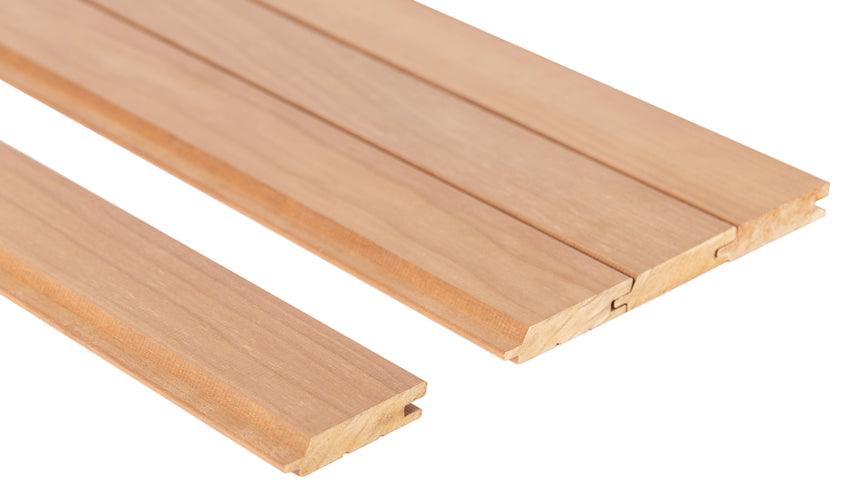
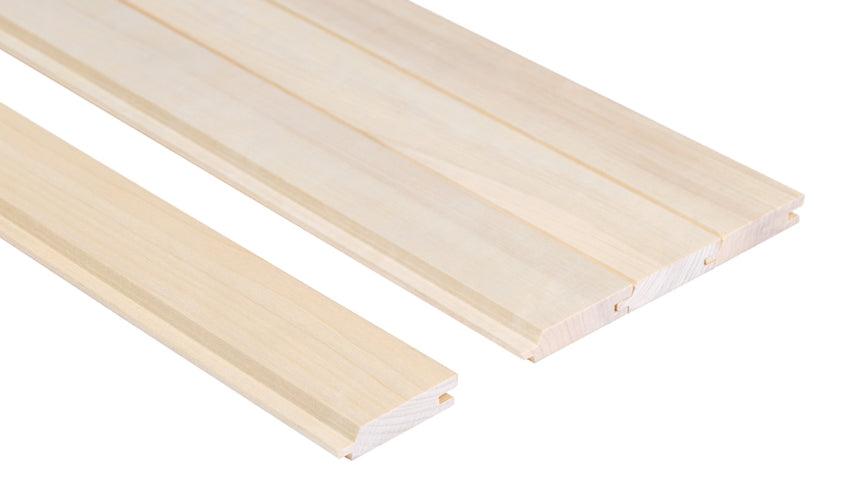
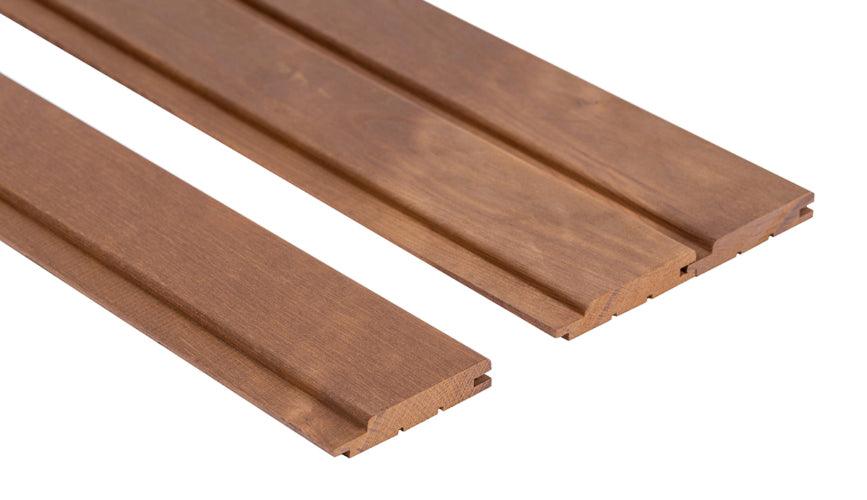
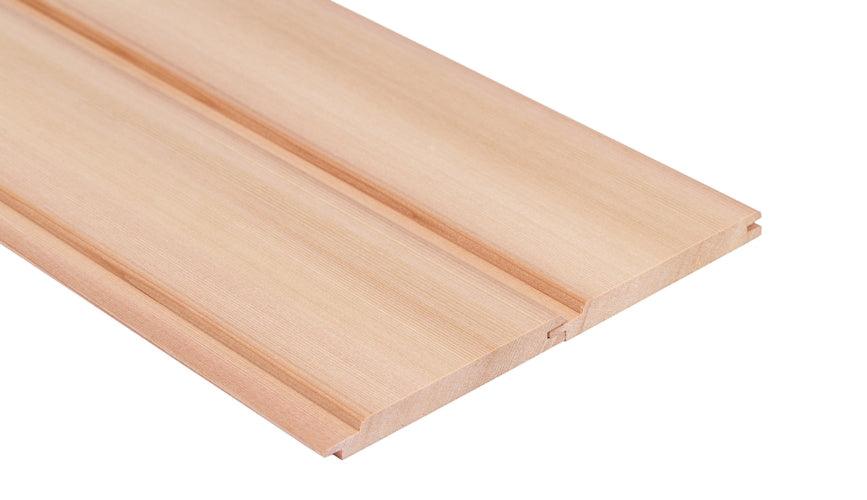
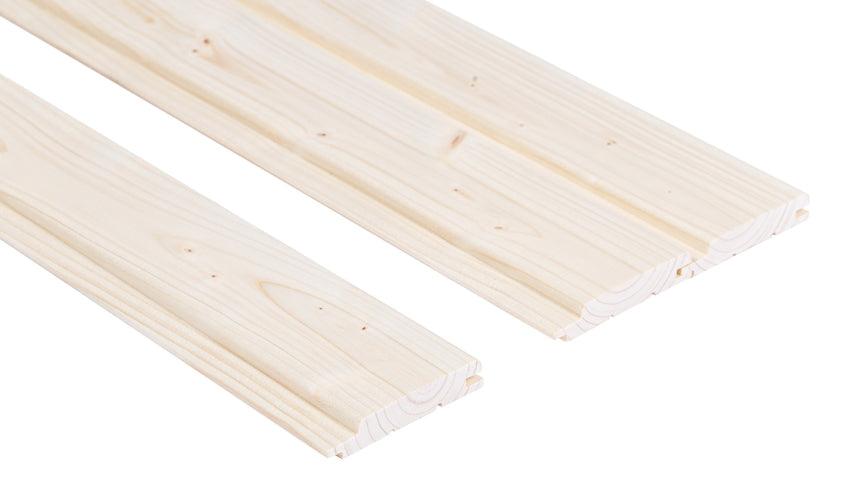
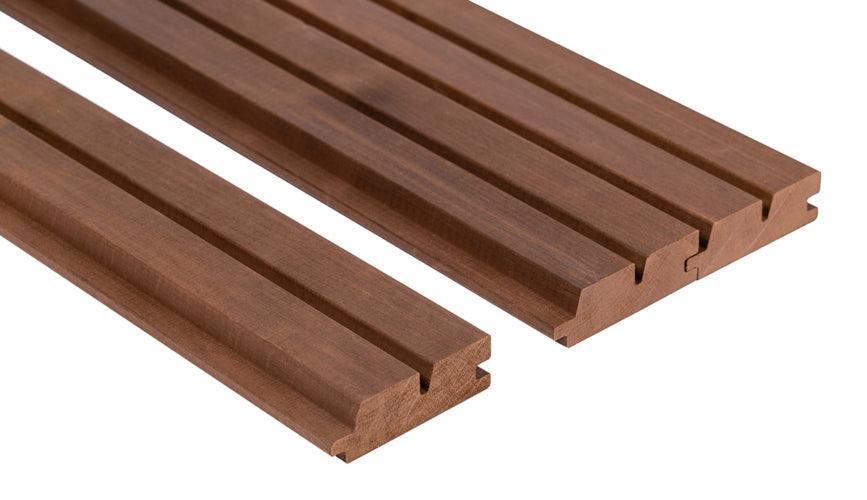
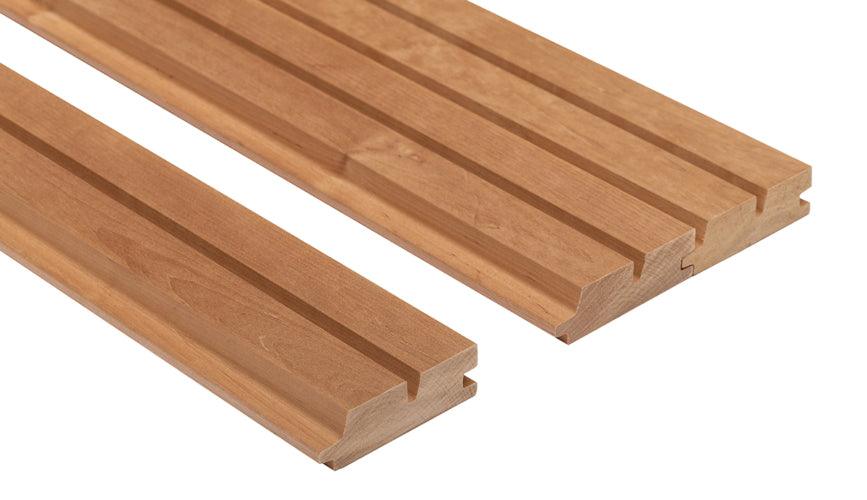
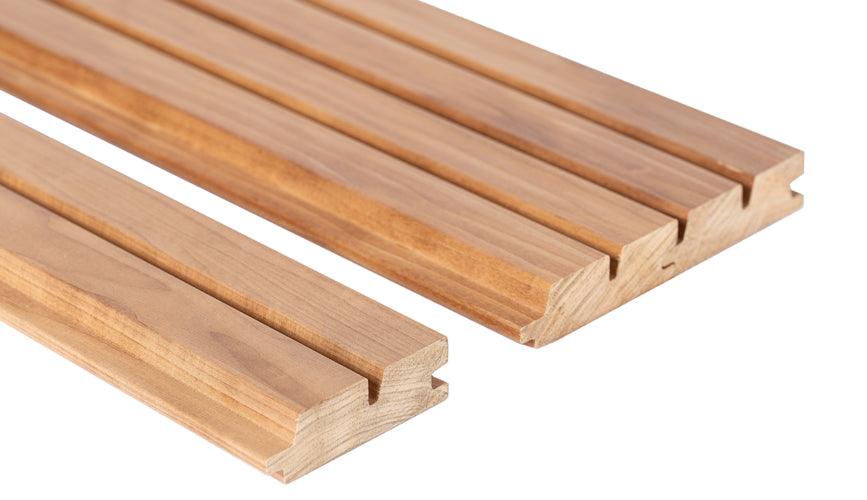
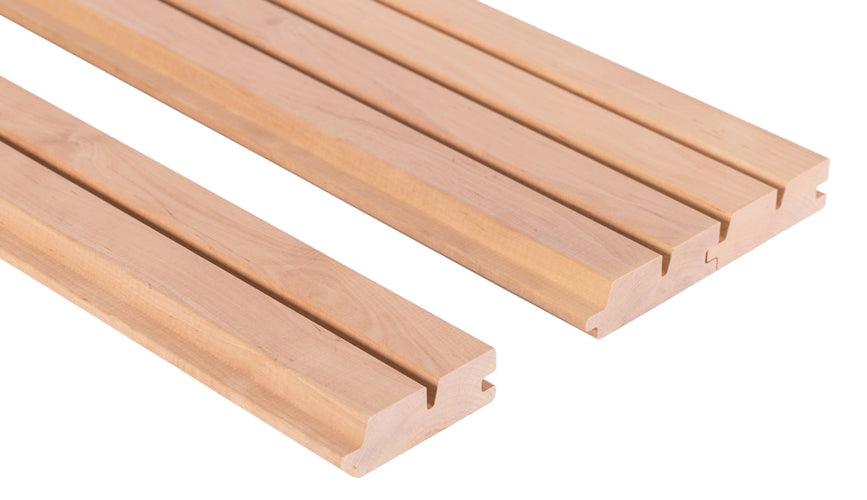
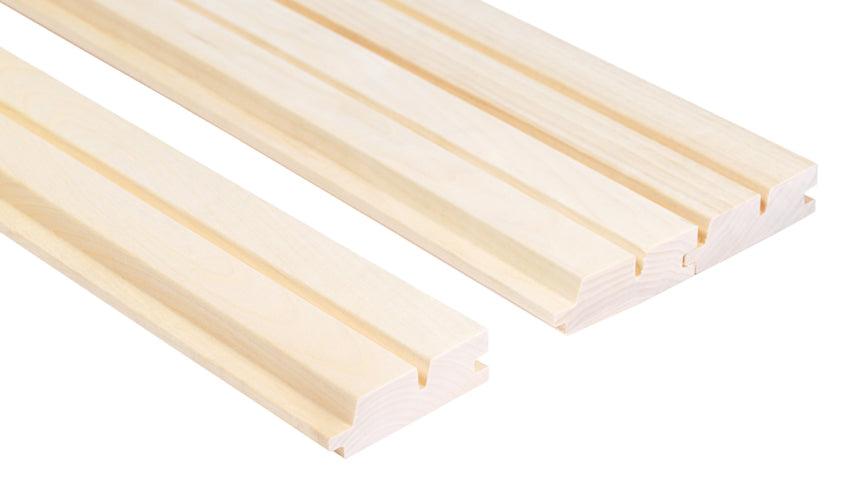
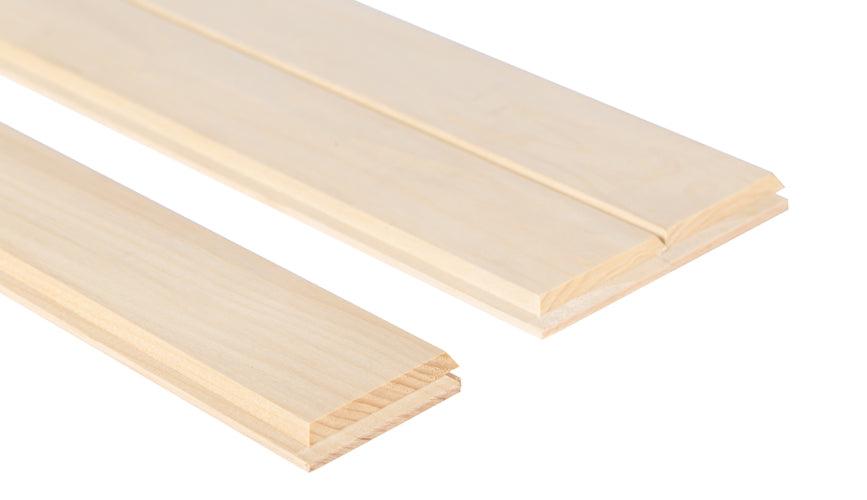
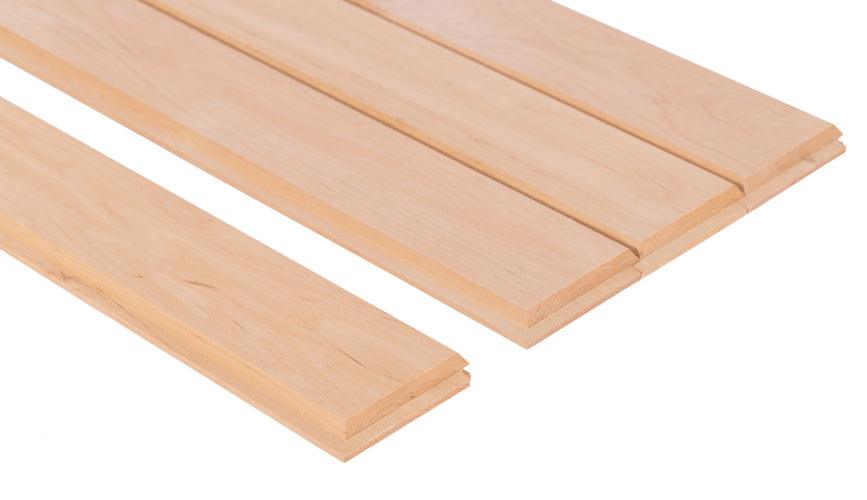
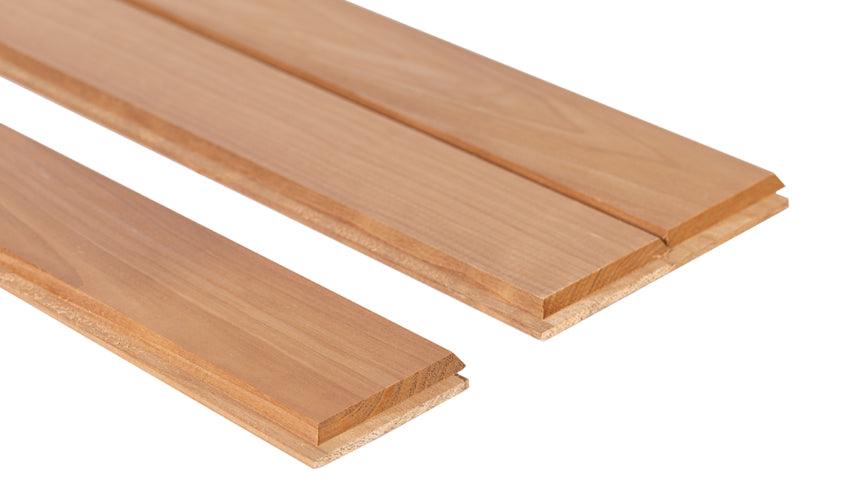
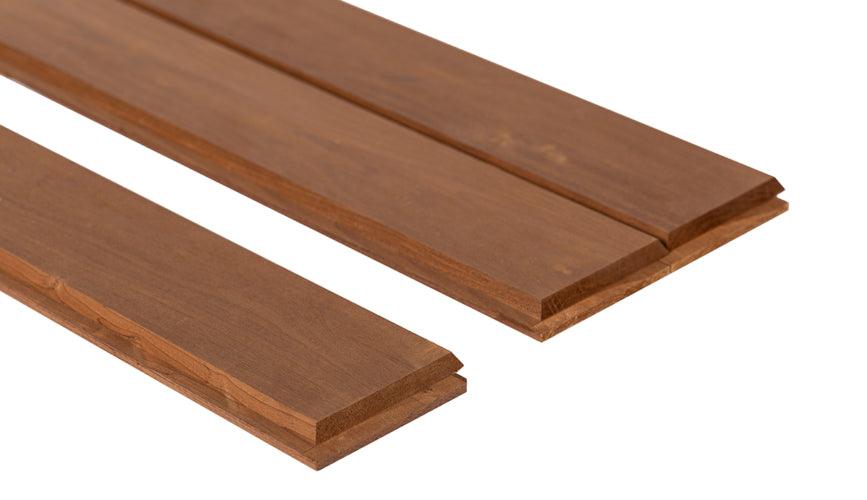
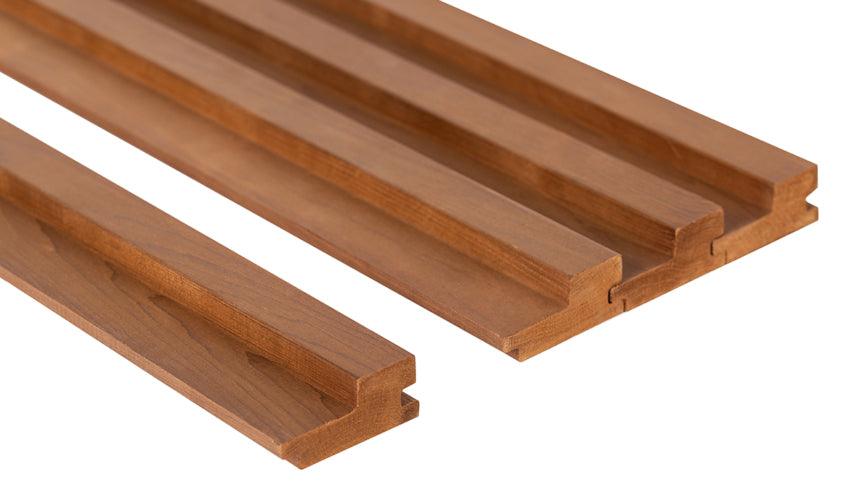
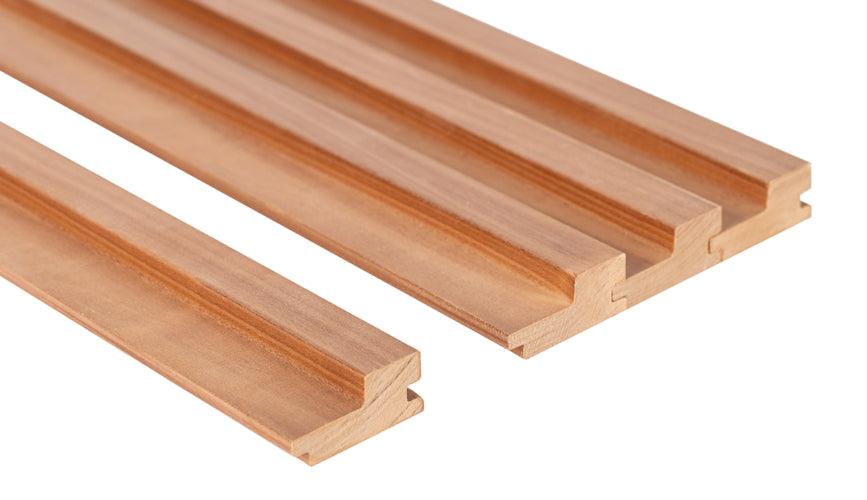
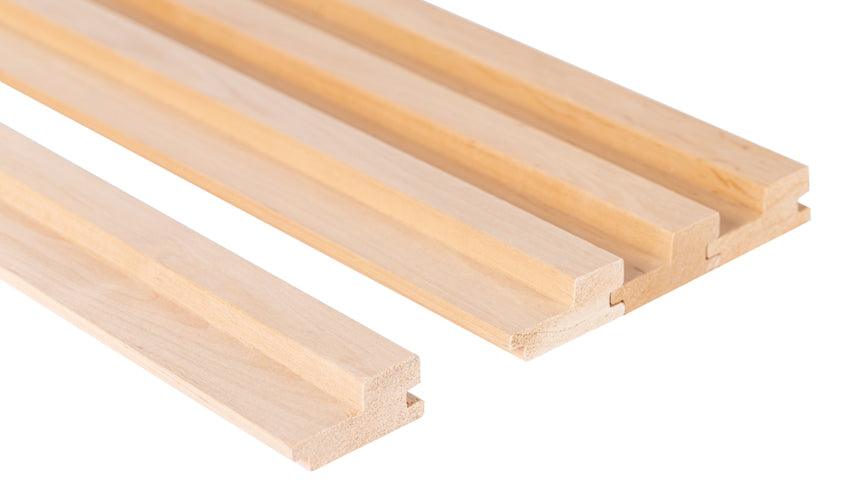
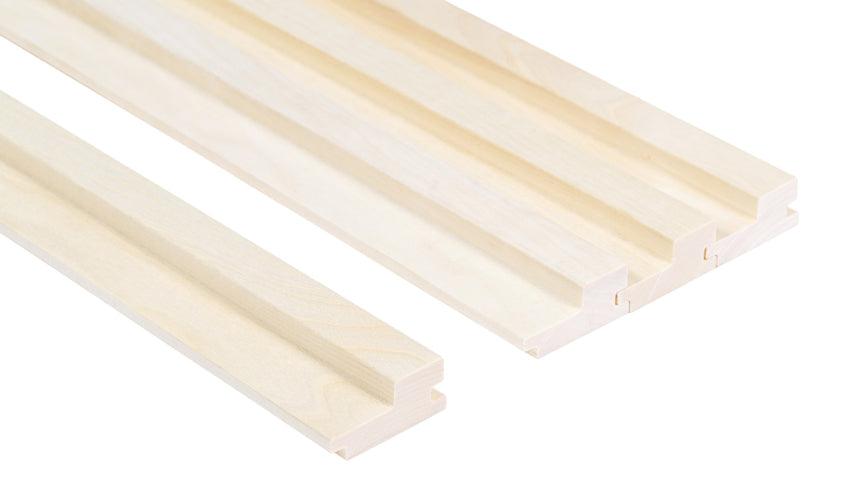
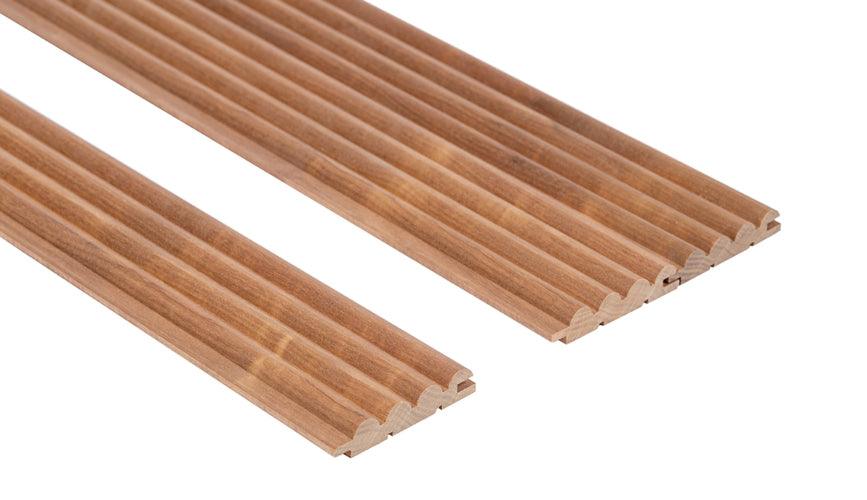
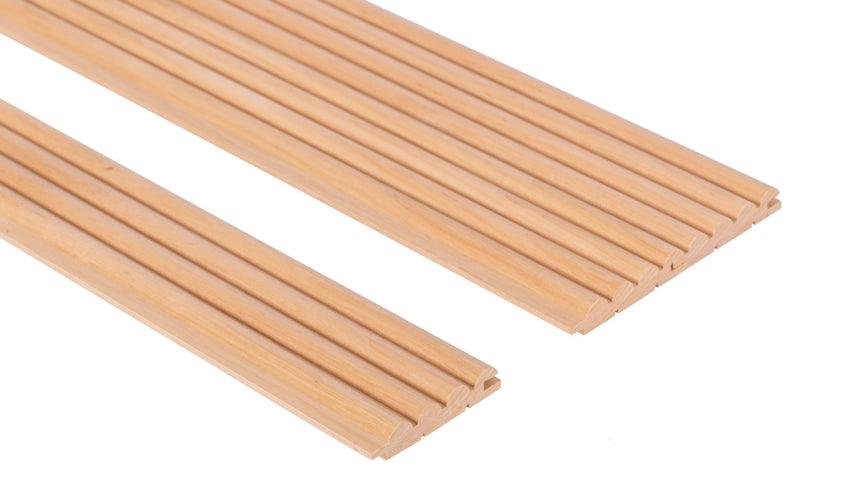
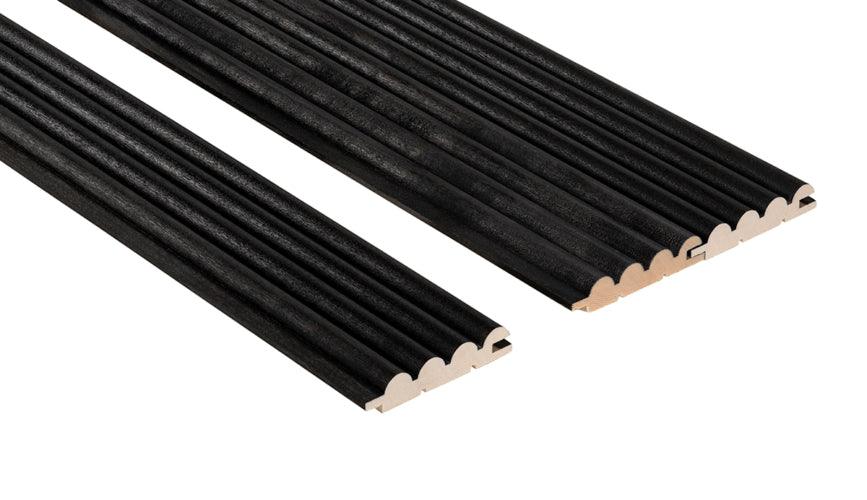
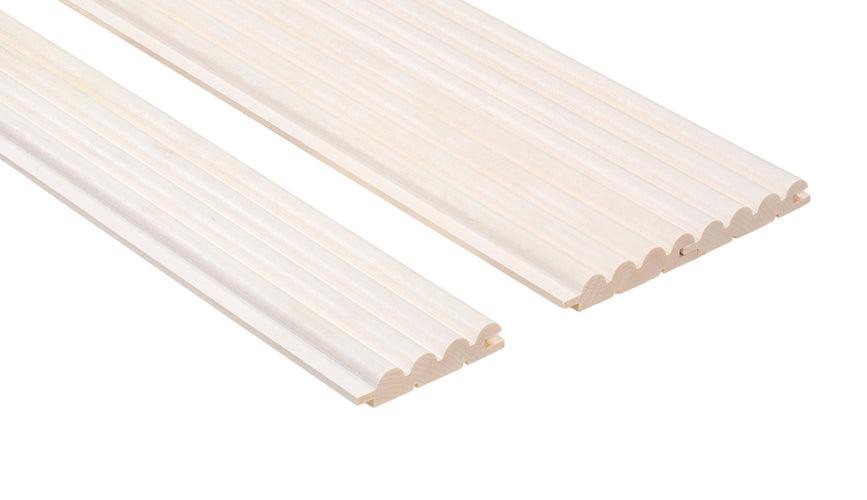
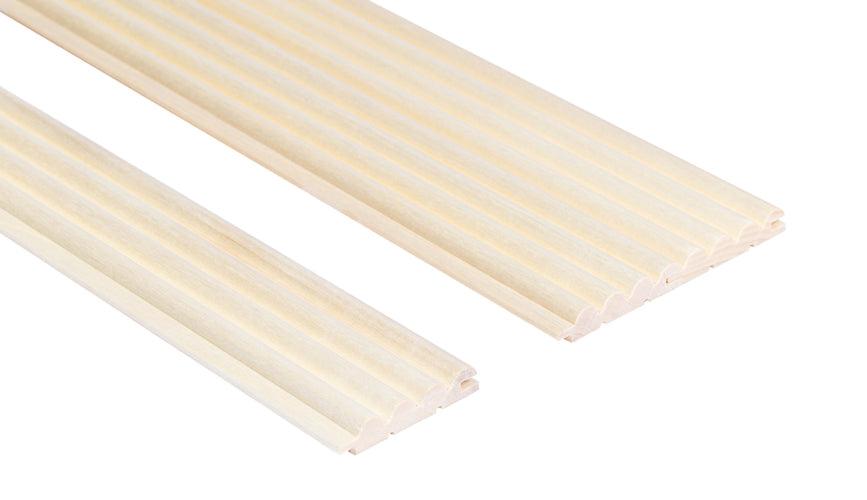
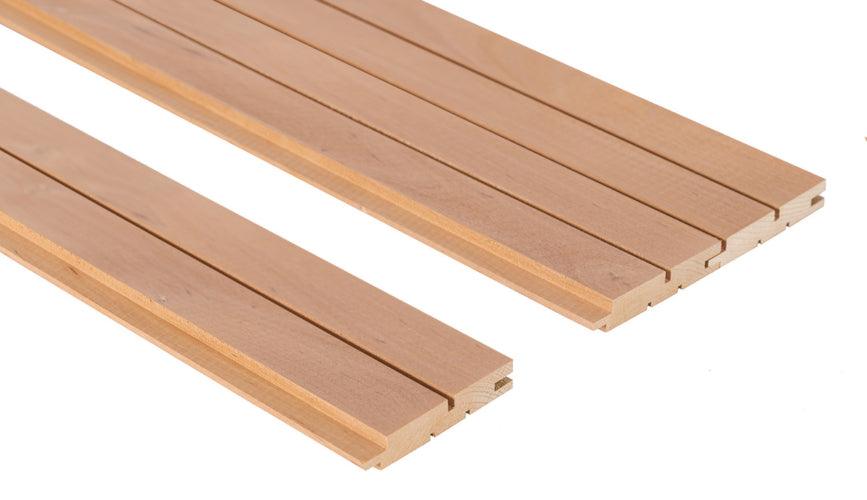
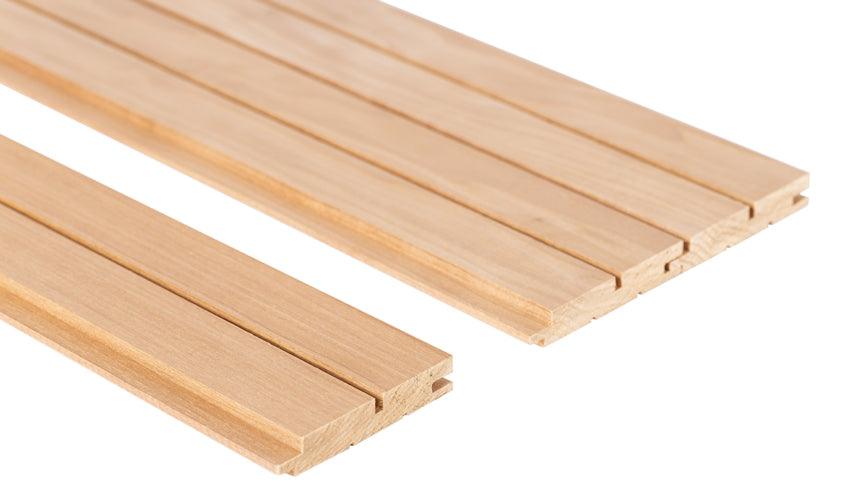
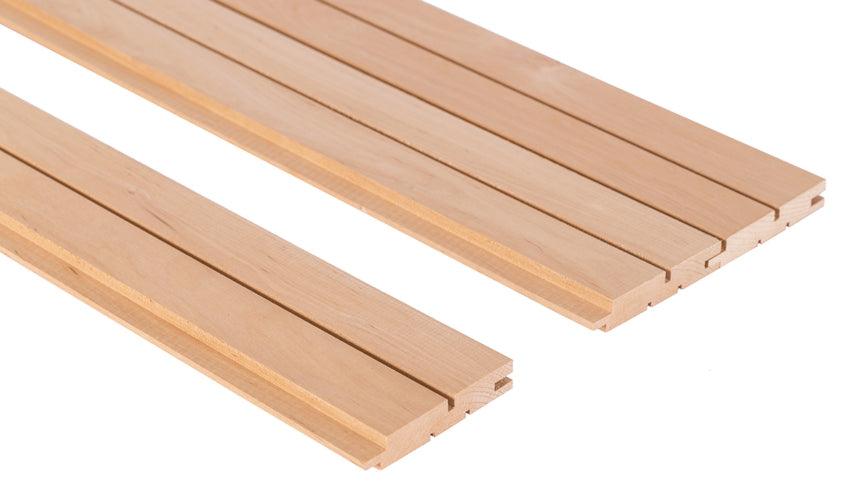
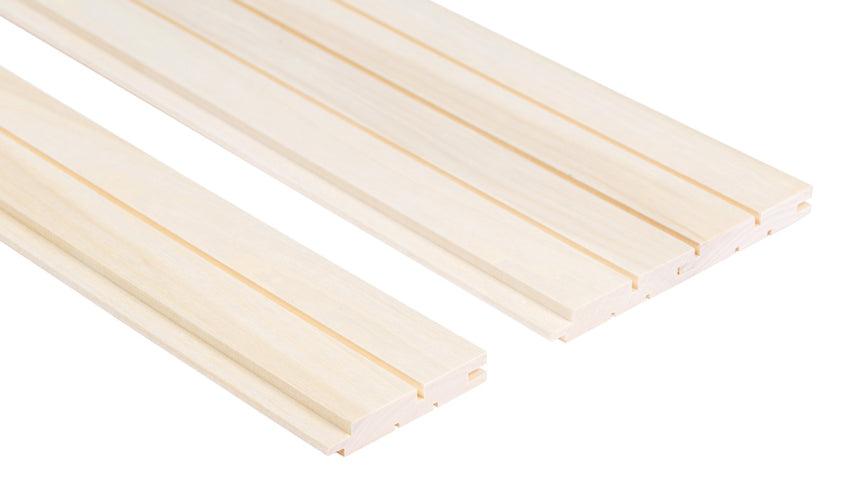
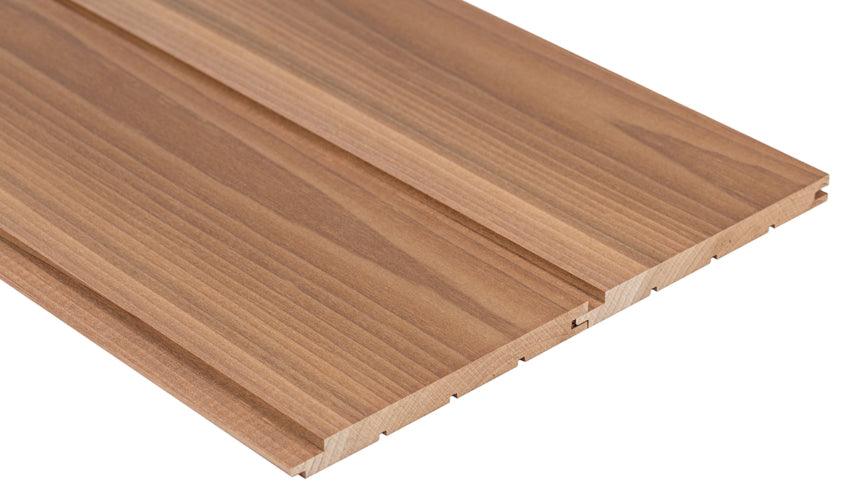
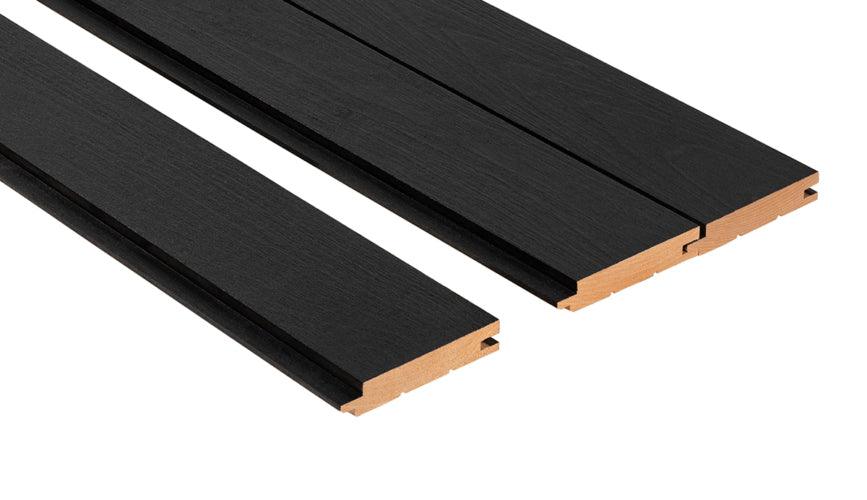
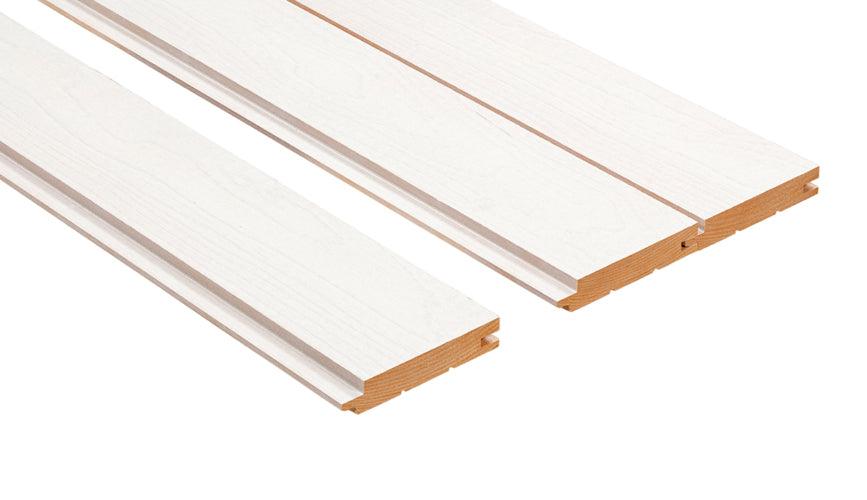
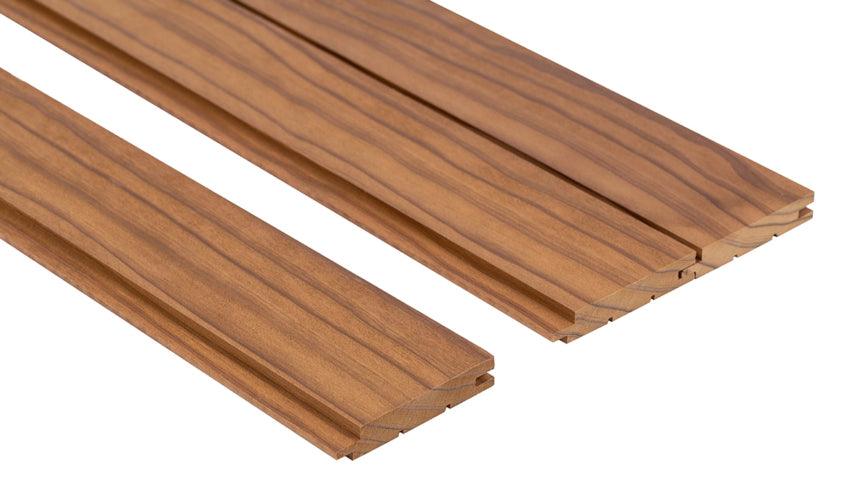
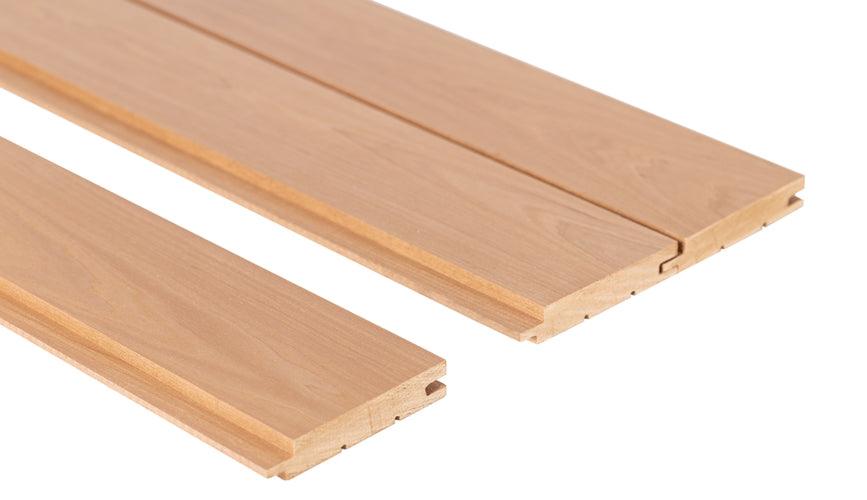
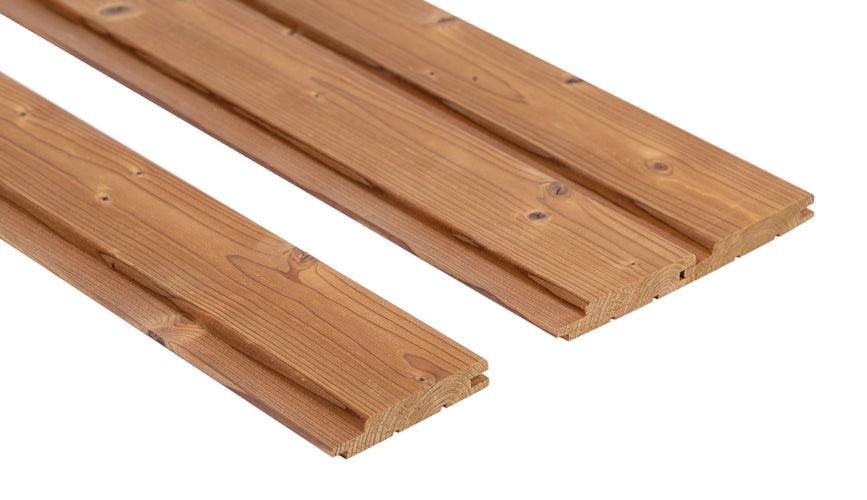
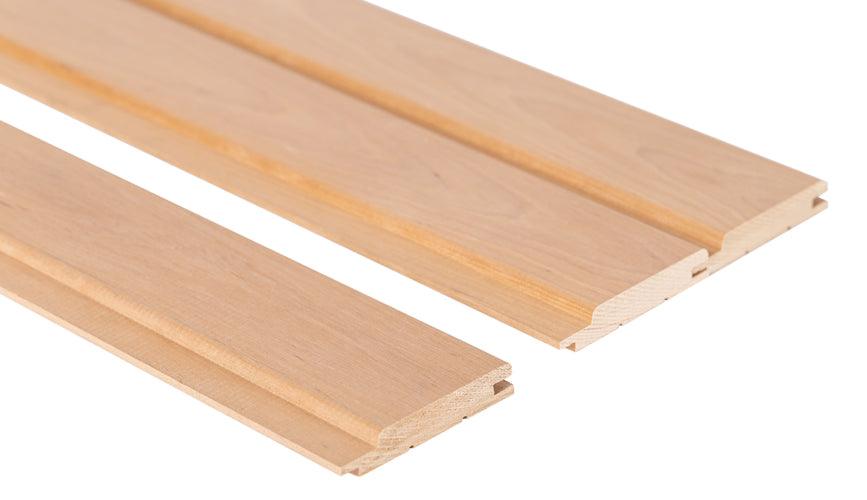
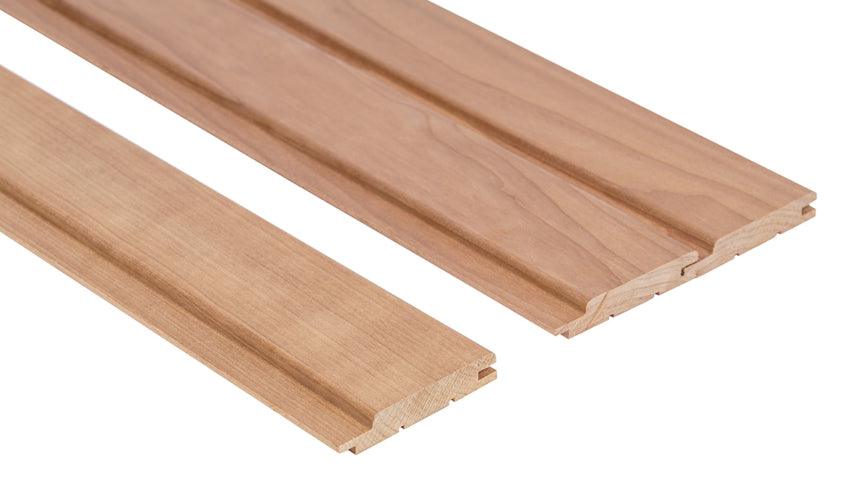
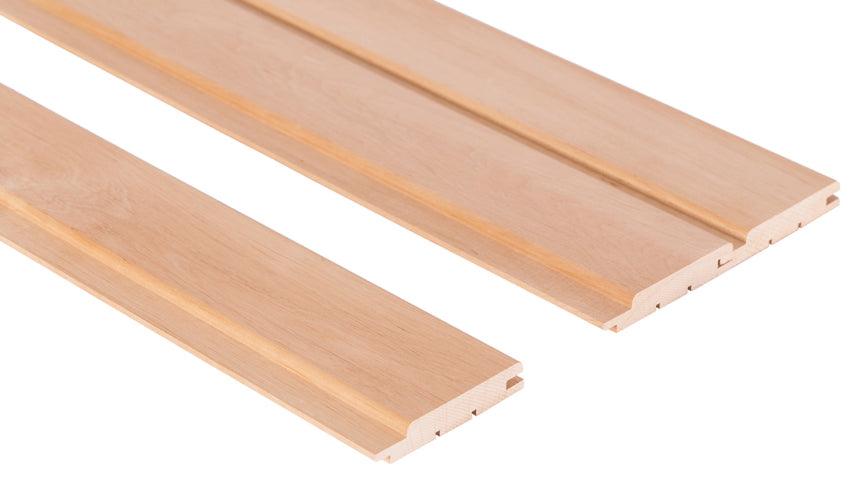
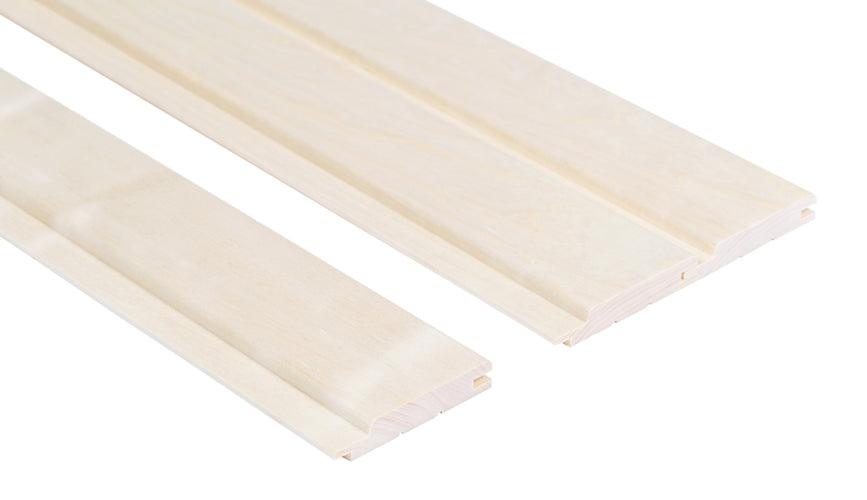
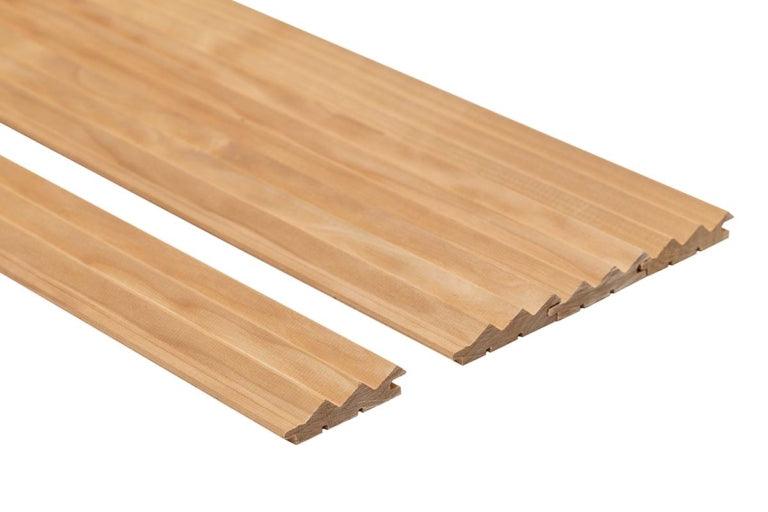
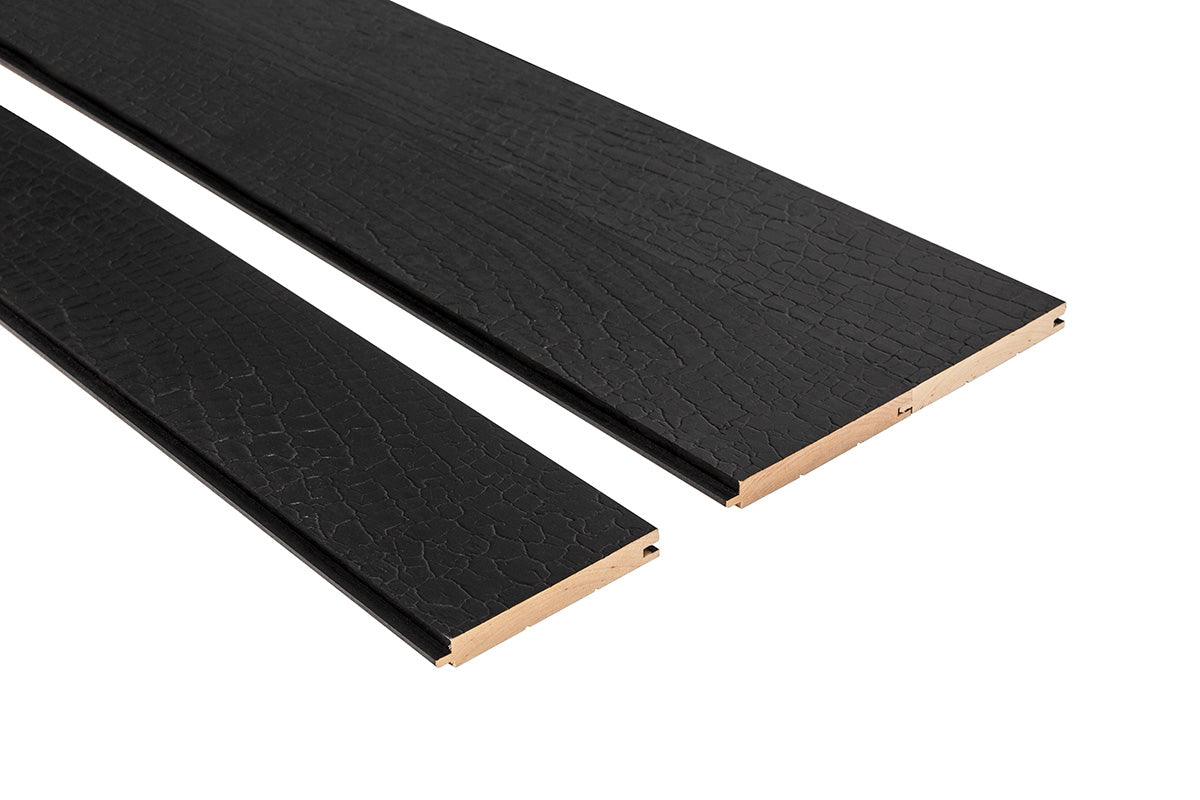
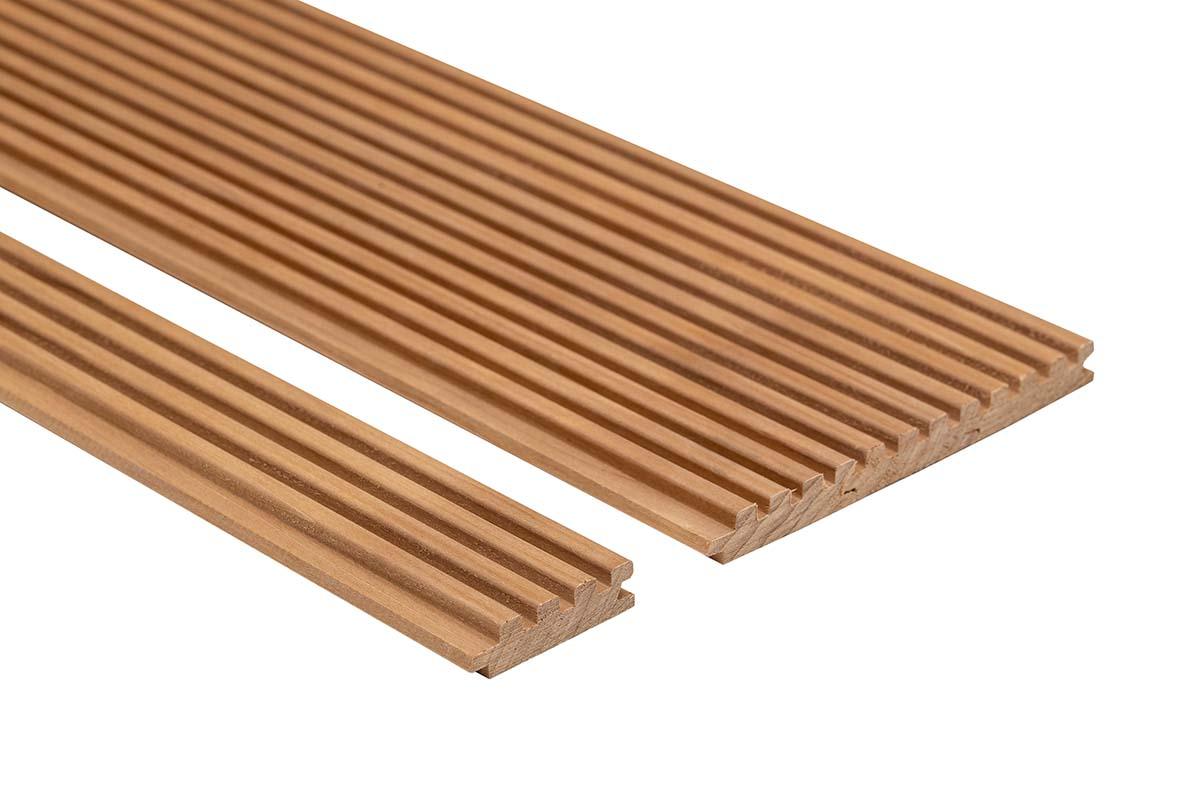
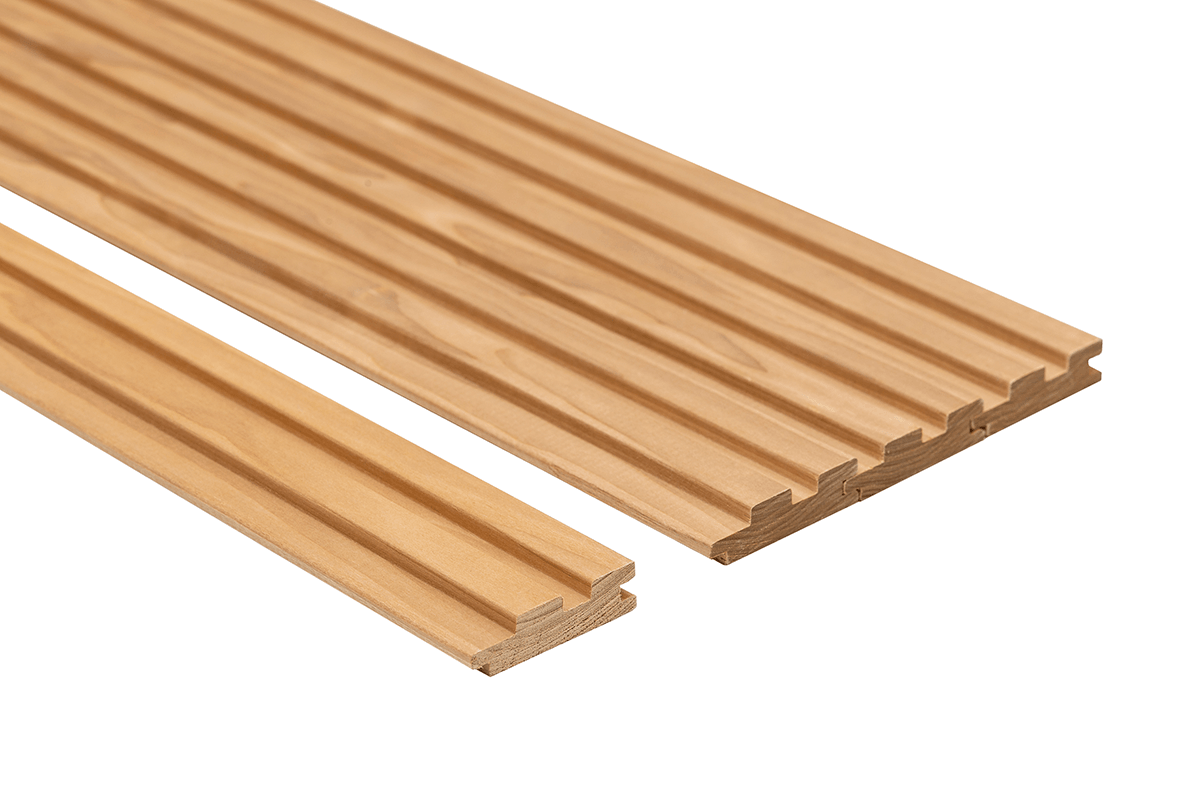
The Look&Feel of your sauna is determined by the choice of wood. We offer a wide range of possibilities regarding wood species and various profiles (including different dimensions per profile).
Below you will find a selection of the options available. These can be applied both horizontally and vertically on the walls.
Wood species:
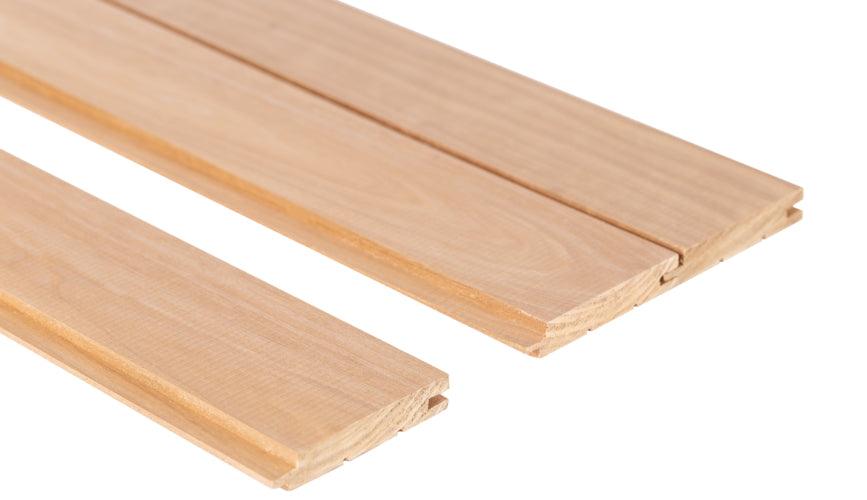
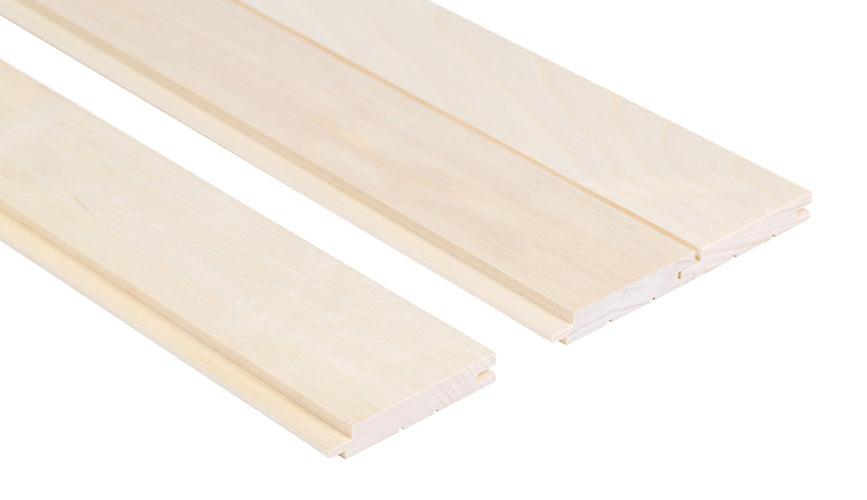
Aspen. Common aspen is a deciduous tree of the willow family, in the Malpighiales order. It grows throughout Europe and most of Asia, as well as in North Africa. Aspen is an ideal sauna material because it does not secrete resin, does not create splinters, or become too hot. Its characteristic light tone and smooth texture give it an attractive appearance. We offer a number of interior sauna elements in natural and thermally modified aspen.
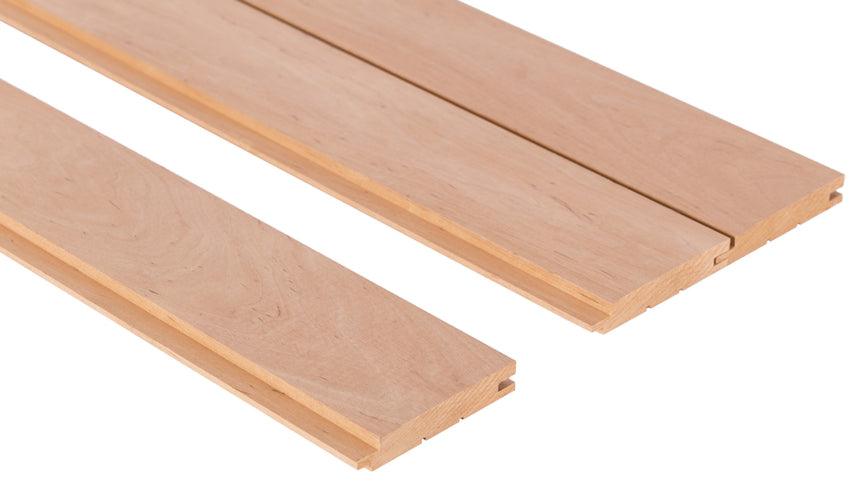
Alder. Common alder, also known as black alder, is a perennial deciduous tree in the birch family of the Fagales order. It can be found in most of Europe, Southwest Asia, and Northern Africa. Thanks to its reddish tone and pleasant texture, alder wood is popular as a finishing material in saunas. Alder is hardy and water-repellent, and it does not overheat. We use alder to produce a variety of materials and products for indoor saunas, with thermally modified and brushed finishes available.
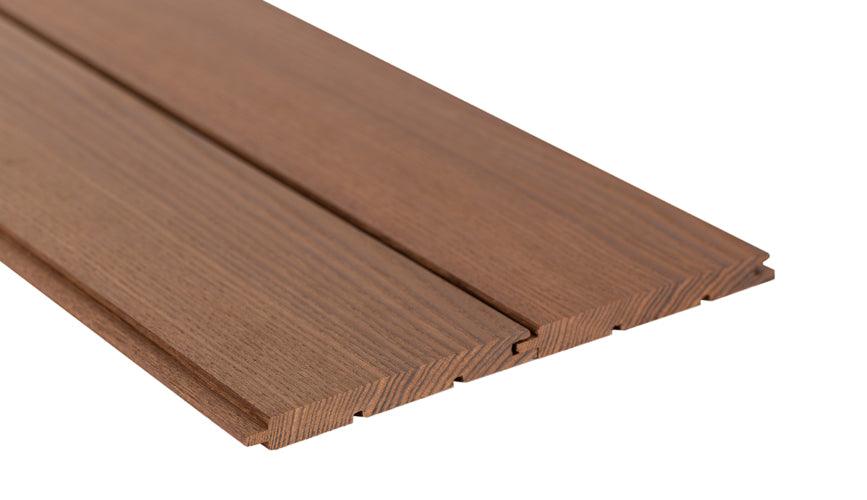
Pine. Scots pine is a conifer of the pine family, in the Pinales order. It is the most widespread pine species and is common in Europe and Asia. In saunas, Scots pine is most frequently used for exterior walls. The wood reacts well to thermal modification, creating an exclusive look, and we also offer sauna materials in natural Scots pine. The wood pattern can also be accentuated by coarse brushing.
Spruce. Norway spruce, or European spruce, is an evergreen conifer of the pine family in the Pinales order. It grows in Northern, Central, and Eastern Europe. The wood of the Norway spruce is almost white, with a light yellow undertone – it is one of the lightest softwoods. Spruce is often used as timber, and for saunas, it is generally the preference for exterior walls. We can also brush the wood to make its natural pattern even more attractive.
Magnolia. Magnolia, also known as the tulip tree, belongs to the magnolia family in the Magnoliales order. It grows primarily in the central and eastern parts of North America. Magnolia has a creamy, golden hue with darker sections and a characteristic pattern with similarities to ash and pine. Together with its low density, this makes it perfect for the sauna. Wide planks and the dark shade achieved through thermal modification offer a luxurious, exclusive finish.
Monterey Pine. Radiata pine is a conifer of the pine family, in the Pinales order. It can be found growing in the western part of North America, New Zealand, Australia, South Africa, Chile, and parts of Europe. The rapid growth and excellent quality of Radiata pine make it the most widely cultivated softwood species. Without visible knots, the wood does not secrete resin, create splinters, or overheat, making it ideal for sauna benches. Wide planks, brushing to bring out the natural pattern, and the dark tint of thermal modification offer an extra touch of luxury.